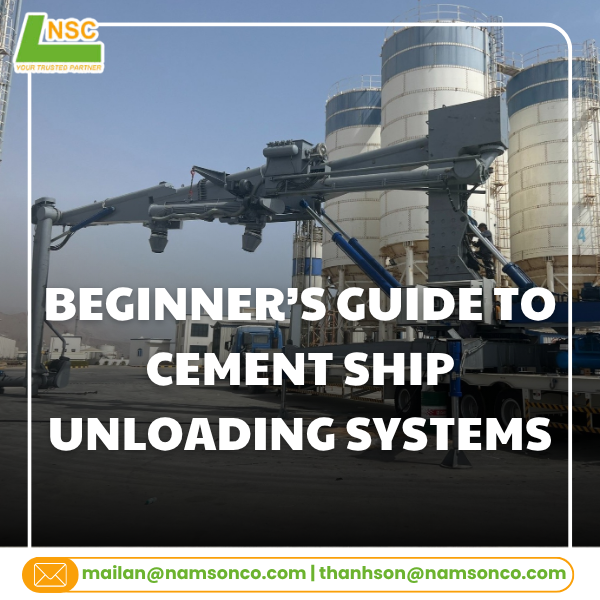
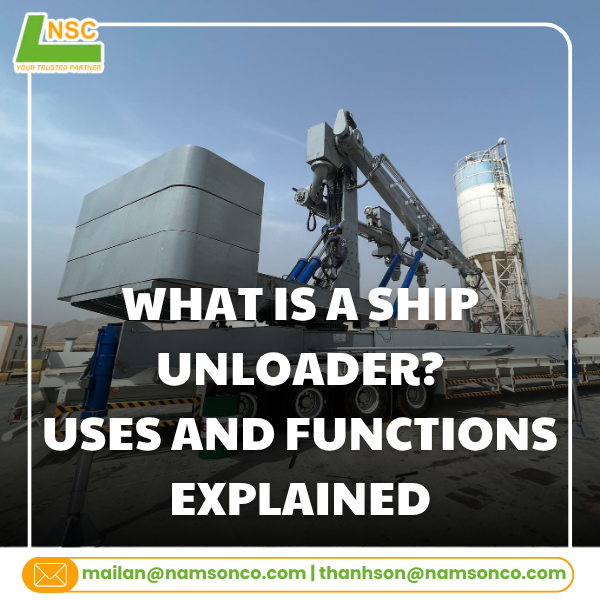
In bulk cement logistics, efficient ship-to-shore cement transfer is critical to terminal productivity.
Cement ship unloading equipment enables fast, safe, and dust-controlled discharge from vessels to storage silos, forming the backbone of modern cement port operations.
Overview of Ship-to-Shore Cement Transfer
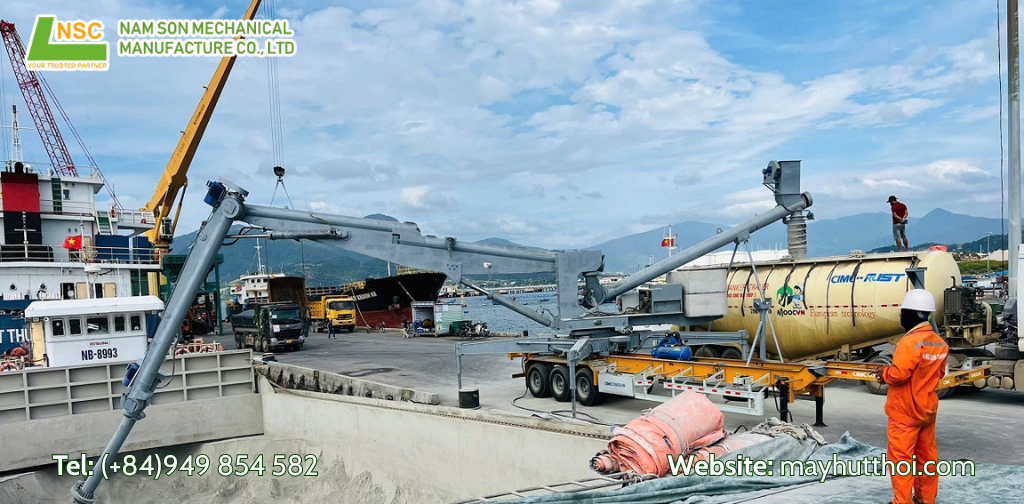
Cement ship unloading equipment plays a central role in modern ship-to-shore cement transfer operations. As global cement demand continues to grow, bulk cement unloading equipment must ensure fast, reliable, and dust-controlled transfer from vessel to terminal. A complete cement vessel unloading system typically connects the marine cement unloader installed at the quay with downstream storage and conveying infrastructure, forming an integrated cement cargo unloading system.
Ship-to-shore cement transfer refers to the continuous movement of bulk cement from a cement bulk carrier to onshore storage facilities such as silos or distribution terminals. Unlike bagged cargo, cement is transported as dry bulk powder and requires enclosed conveying solutions to prevent material loss and environmental pollution. Therefore, selecting the appropriate marine cement unloader and related cement discharge equipment is critical for terminal efficiency, operational safety, and environmental compliance.
Modern ports increasingly invest in automated bulk cement unloading equipment to reduce vessel turnaround time and improve overall logistics performance. The design of a ship-to-shore cement unloading system must consider vessel size, unloading capacity requirements, transfer distance, and integration with the terminal’s cement storage silo system.
=>See more:5 common errors when operating a cement ship unloader and how to fix them
Main Types of Cement Ship Unloading Equipment
Pneumatic Cement Ship Unloader
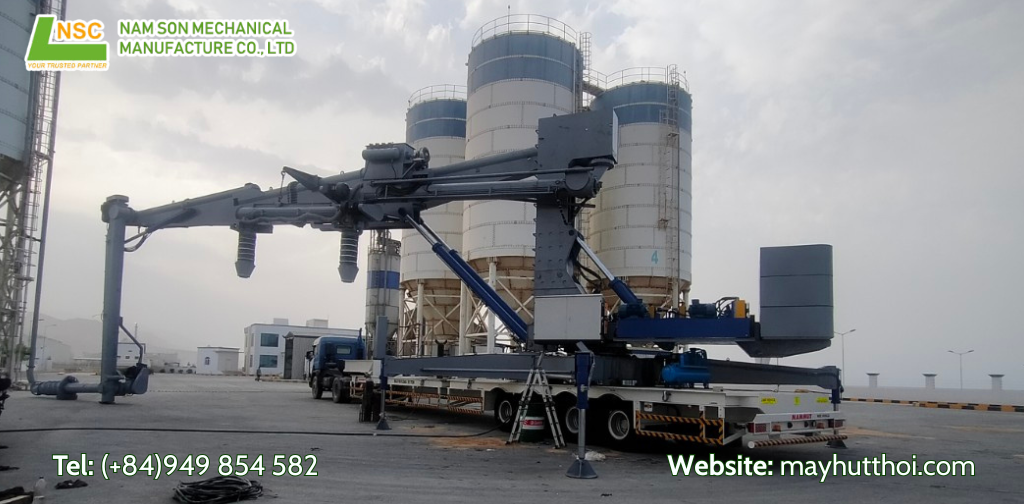
The pneumatic cement ship unloader is one of the most widely used solutions in ship-to-shore cement transfer. This system uses air pressure to move cement through pipelines from the vessel’s hold to the shore facility. A vacuum cement unloader first extracts cement from the ship, after which the material is conveyed through a pneumatic pipeline cement transport system using compressed air.
Two common conveying principles are dense phase cement conveying and dilute phase transport. Dense phase systems operate at lower velocities and are suitable for longer distances with reduced pipeline wear, while dilute phase systems provide high-speed transfer for shorter routes. An air compressor for cement unloading or roots blower cement system supplies the necessary airflow to ensure continuous material movement.
Pneumatic cement ship unloading equipment is particularly valued for its enclosed design. Since the cement is transported inside sealed pipelines, dust emission is minimized. This makes pneumatic systems highly suitable for terminals with strict environmental regulations. Additionally, pneumatic solutions allow flexible routing and easier integration into existing cement port terminal equipment layouts.
Mechanical Cement Ship Unloader
Mechanical bulk cement unloader systems rely on physical conveying components to transfer cement from ship to shore. A screw conveyor cement unloading mechanism is often used to extract cement from the ship’s hold and move it toward a discharge point. From there, a belt conveyor system for cement port operations or a chain bucket elevator cement unit lifts and transports the material to shore.
Some terminals employ grab type ship unloader for cement in combination with mechanical conveyors. In such setups, a crane-mounted grab collects cement and deposits it into a receiving hopper before it is transferred through mechanical conveying lines. Vertical cement conveyor systems can also be integrated to handle elevation changes between quay and storage silos.
Mechanical cement ship unloading equipment is known for its robust structure and high throughput capacity. It is often selected for large-scale terminals handling high daily volumes. However, compared to pneumatic systems, mechanical solutions require more extensive dust control measures due to open transfer points.
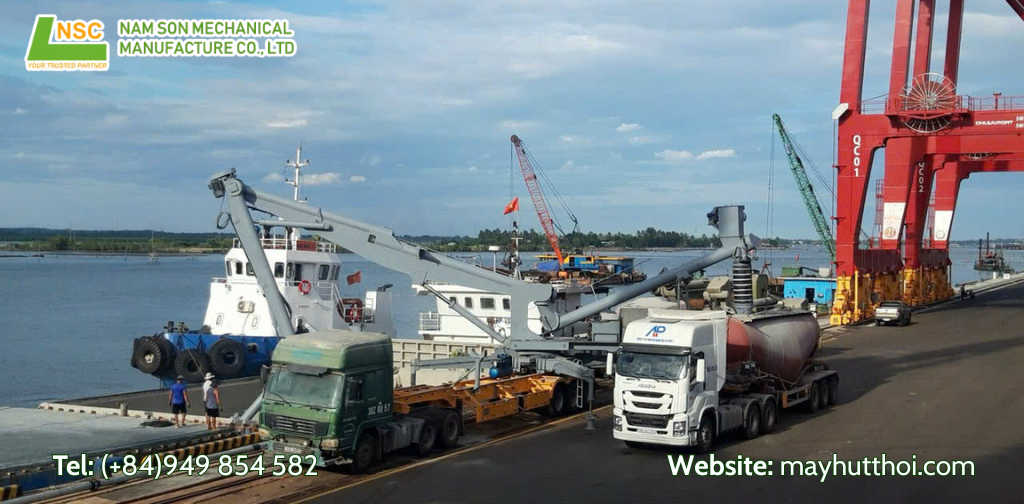
Cement Transfer from Ship to Shore
Ship-to-Silo Cement Transfer
A critical stage in ship-to-shore cement transfer is the movement from the unloading point to storage. A well-designed ship-to-silo cement transfer system ensures uninterrupted flow and prevents bottlenecks. After the cement transfer hopper receives material from the unloader, the cement pipeline system or mechanical conveyor directs the cement to its final storage destination.
In pneumatic configurations, the cement feeding system regulates flow into the pipeline to maintain stable pressure and prevent blockages. The material then enters a cement storage silo system, where it is stored under controlled conditions before distribution. Proper coordination between the unloader and silo discharge system is essential to maintain consistent transfer rates and avoid overloading.
Efficient ship-to-silo cement transfer not only improves unloading speed but also protects product quality. Since cement is sensitive to moisture, all components in the transfer chain must be sealed and weather-resistant.
Bulk Material Handling Integration
Cement ship unloading equipment does not operate independently; it forms part of a broader bulk material handling system within the port. Dry bulk handling equipment must synchronize with unloading operations to maintain steady throughput. A powder conveying system ensures that cement moves smoothly from the quay to processing or storage areas.
Modern cement port terminal equipment integrates unloading, conveying, storage, and dispatch into a unified operation. By aligning the marine cement unloader with downstream systems, terminals can optimize workflow, reduce idle time, and improve asset utilization. Proper system integration is therefore a defining factor in successful ship-to-shore cement transfer projects.
Key Performance Features
Performance is a decisive factor when selecting cement ship unloading equipment. A high capacity cement ship unloader is essential for large bulk carriers, especially when terminal schedules are tight. Systems such as a 300tph cement ship unloader or higher capacity configurations allow continuous operation cement unloader performance, significantly reducing vessel berth time.
Beyond capacity, dust control is a primary concern. Dust free cement unloading equipment is increasingly required in modern ports. A dedicated dust control system for cement unloading, combined with an enclosed cement transfer system, ensures compliance with environmental standards and enhances workplace safety.
Durability and reliability also contribute to performance. Cement is abrasive, and all conveying components must withstand continuous exposure. Properly engineered equipment ensures stable operation under heavy-duty conditions while minimizing maintenance interruptions.
Automation and Environmental Control
Automation is transforming ship-to-shore cement transfer. An automated cement unloading system integrates sensors, control panels, and PLC controlled cement unloading system architecture to regulate flow rate, pressure, and discharge speed. This reduces human error and improves operational accuracy.
An intelligent bulk handling system can monitor performance parameters in real time, allowing operators to detect anomalies and optimize system settings. Automation not only enhances efficiency but also supports predictive maintenance strategies, reducing unexpected downtime.
Environmental control remains a parallel priority. A bag filter for cement terminal installations captures airborne particles generated during transfer. Together with pollution control cement handling measures, these systems minimize environmental impact. As regulations tighten globally, automated and environmentally responsible cement ship unloading equipment becomes a competitive advantage for port operators.
.png)
Selection and Commercial Considerations
Choosing the right cement ship unloading equipment requires evaluation of both technical and commercial factors. Working with an experienced cement ship unloader manufacturer ensures that the system is engineered according to vessel type, required capacity, and site constraints. A reliable cement unloading equipment supplier will provide detailed technical proposals, performance data, and lifecycle cost analysis.
Customization is often necessary, particularly when integrating equipment into existing terminals. Customized cement unloading equipment can adapt to unique quay layouts, storage configurations, and throughput targets. Cost evaluation, including cement ship unloader cost and installation expenses, must be balanced against long-term operational efficiency.
Many port operators prefer turnkey cement terminal solution providers who handle design, manufacturing, installation, and commissioning. This approach simplifies project management and ensures compatibility between all components of the ship-to-shore cement transfer system.
Conclusion
Cement ship unloading equipment is the foundation of efficient ship-to-shore cement transfer operations. Whether employing pneumatic cement ship unloader technology or mechanical bulk cement unloader systems, the objective remains the same: safe, fast, and environmentally controlled transfer of bulk cement from vessel to storage.
Modern terminals increasingly prioritize energy efficient cement unloading system designs and eco friendly cement handling solution strategies to meet both economic and regulatory demands. By selecting well-engineered equipment and integrating it into a comprehensive bulk material handling system, port operators can optimize cement terminal efficiency and secure long-term operational success.
Contact us
Looking for a reliable cement ship unloader manufacturer or turnkey cement terminal solution? Contact us today for customized cement ship unloading equipment designed to match your capacity, layout, and operational requirements. Our engineering team is ready to support your next ship-to-shore cement transfer project.
✱ Website: mayhutthoi.com|
namsonco.com✱ Alibaba:dthson.trustpass.alibaba.com✱ Facebook: facebook.com/NamSonPneumaticConveyor✱ Zalo/Whatsapp:(+84) 949854582
✱ Email: mailan@namsonco.com | thanhson@namsonco.com