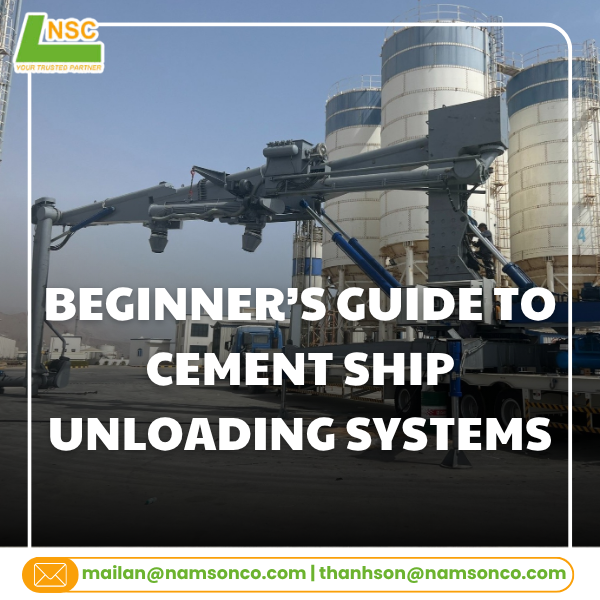
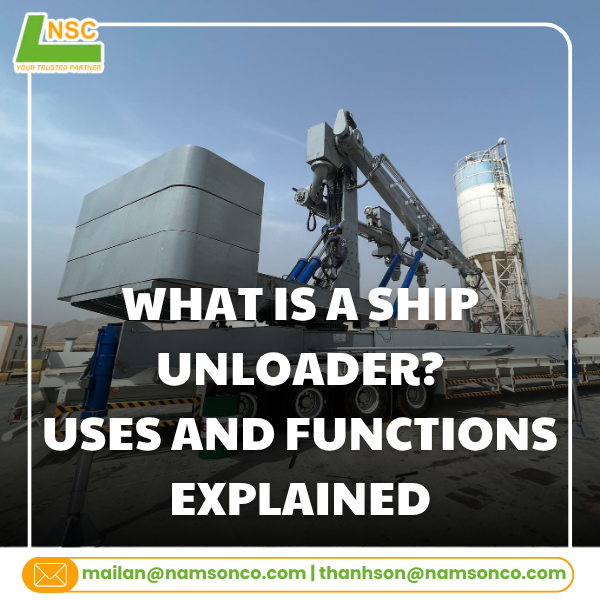
Cement terminals that handle bulk imports require reliable and efficient unloading technology to maintain stable operations. A
pneumatic cement ship unloader system has become one of the most widely used solutions because it allows enclosed material transfer, reduces dust emissions, and ensures efficient cement handling.
Selecting the right system is essential for improving the performance of a cement terminal handling system and supporting modern cement port logistics solutions. When properly designed and installed, pneumatic unloading equipment can significantly improve efficiency in marine cement logistics equipment and bulk cement handling operations.
What Is a Pneumatic Cement Ship Unloader System?
1. Working Principle
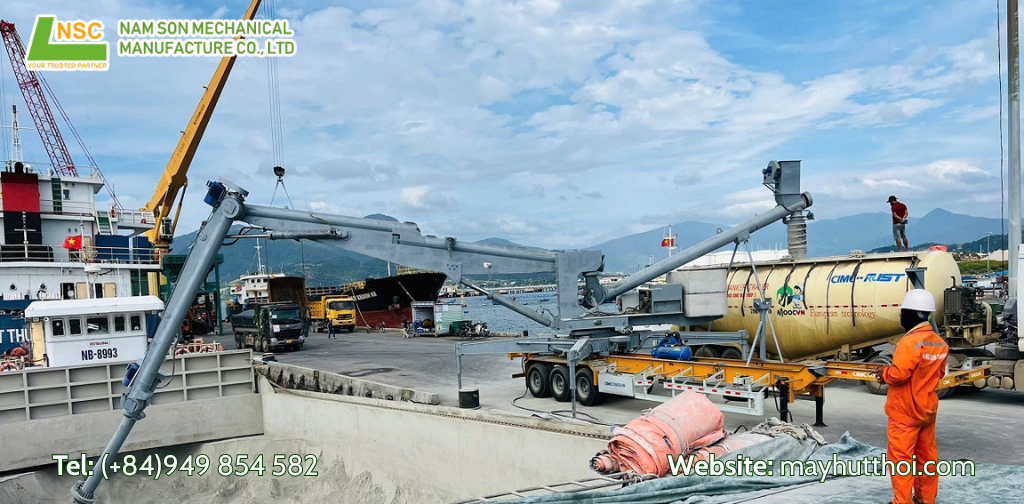
A pneumatic ship unloader is designed to transfer cement powder from cargo vessels using air pressure or vacuum conveying technology. During operation, cement is collected from the ship’s cargo hold and transported through a pneumatic conveying system for cement.
Inside the system, compressed air moves the material through a cement conveying pipeline, allowing the cement ship unloading system to deliver bulk material directly to storage facilities. This compressed air cement conveying system allows clean, enclosed transport of cement from the vessel to onshore infrastructure.
2. Main Advantages
A pneumatic powder conveying system offers several operational advantages for cement terminals. Because the material moves through sealed pipelines, the unloading process produces significantly less dust compared with open mechanical systems.
Many terminals also use a vacuum pneumatic cement unloader because it provides flexible operation when removing cement from deep cargo holds. In addition, an air pressure cement unloading system can maintain stable material flow and improve unloading efficiency during large-scale terminal operations.
=>See more: Best practices for pneumatic cement ship unloader maintenance and cleaning
Key Components of the System
1. Mechanical and Pneumatic Equipment
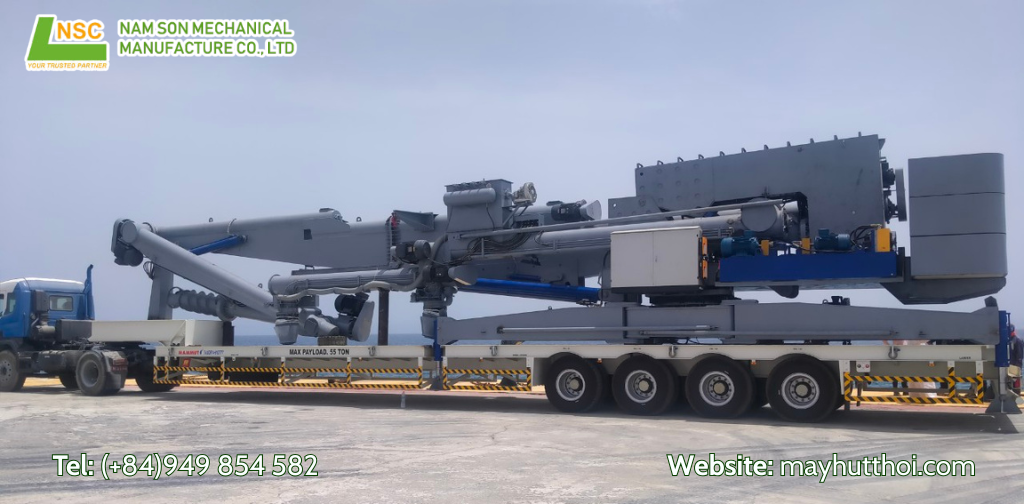
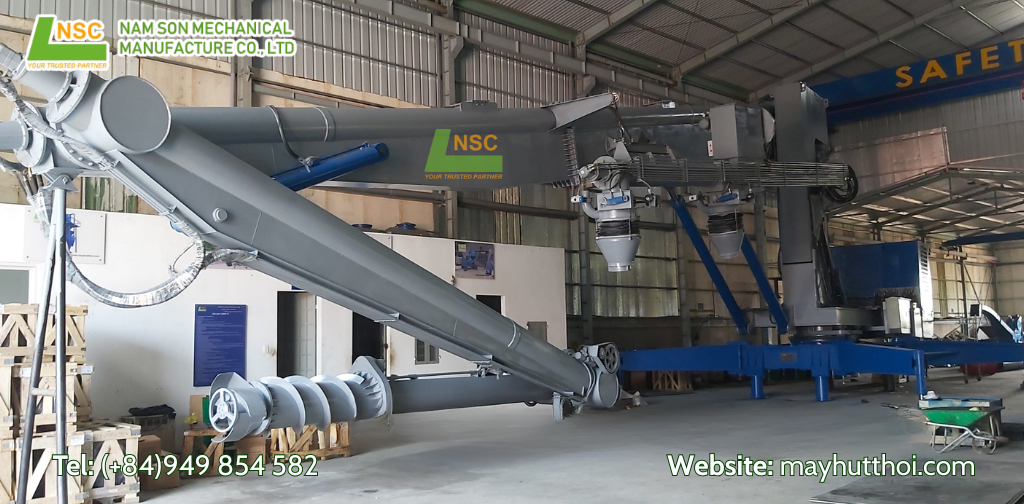
The core structure of a pneumatic cement ship unloader system consists of several interconnected components that enable stable material transport. A pneumatic pipeline system forms the primary path through which cement powder travels from the vessel to the terminal.
To regulate the flow of material within the system, a rotary feeder for cement unloading is installed between conveying stages. This component controls the feed rate and prevents pressure loss during operation. The entire conveying process is powered by an air compressor for pneumatic conveying, which generates the airflow required to move cement through the pipeline network.
2. Supporting Equipment
Supporting equipment plays an important role in maintaining stable and safe operations. Once the cement reaches the terminal, it is typically transferred into a cement storage silo system for temporary storage before further distribution.
To maintain environmental safety within the terminal, a dust collector for cement unloading captures airborne particles generated during unloading. A cement screw conveyor system may also be used to move cement from receiving points to storage silos or additional conveying systems.
Types of Pneumatic Cement Ship Unloaders
1. Vacuum Pneumatic Ship Unloader
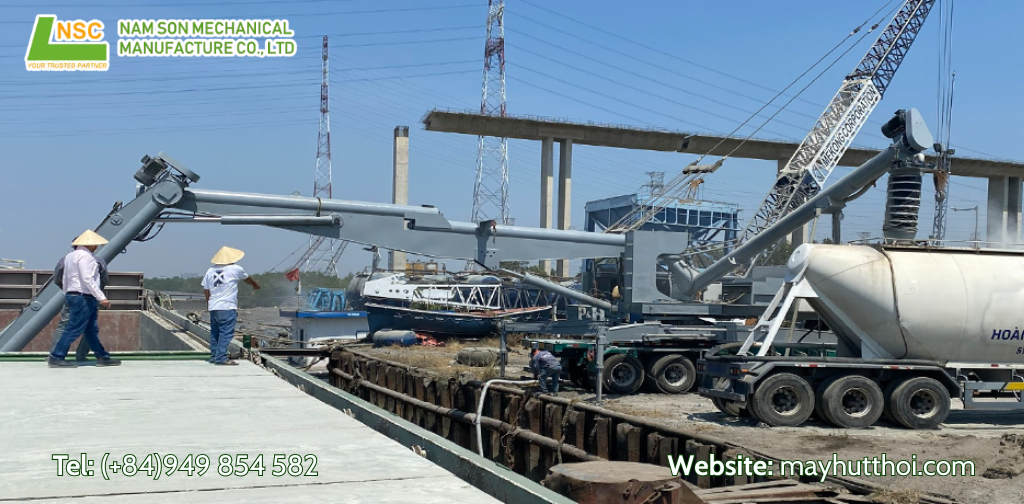
A pneumatic suction cement unloader operates by creating a vacuum that draws cement powder from the ship’s cargo hold. This vacuum pneumatic cement unloading equipment allows operators to move the suction nozzle across different areas of the cargo hold, ensuring efficient removal of bulk cement.
Vacuum systems are commonly used in cement terminals because they provide flexibility and reliable powder handling in confined spaces.
2. Pressure Pneumatic Conveying System
Another commonly used technology is the pressure pneumatic conveying system. Instead of suction, this configuration uses compressed air to push cement through pipelines toward storage facilities.
A pneumatic powder transfer system based on pressure conveying is often selected when cement must travel longer distances within a terminal. Pressure systems are known for their stable performance and efficient bulk powder transport.
Factors to Consider When Choosing a System
1. Unloading Capacity
Unloading capacity is one of the most important considerations when selecting equipment. Terminals handling large cargo vessels require a high capacity cement ship unloader capable of transferring large volumes of cement within a limited time.
In many large ports, operators choose a large capacity bulk cement unloader to support continuous unloading operations. A high throughput cement unloading system helps reduce vessel waiting time and improves the overall efficiency of port logistics.
2. Energy Efficiency
Energy consumption has a significant impact on long-term operating costs. Choosing an energy efficient pneumatic unloader can help terminals reduce power usage while maintaining stable conveying performance.
A well-designed system can maintain a consistent cement discharge rate system while minimizing energy loss throughout the pneumatic conveying process.
3. Port Integration
The unloading equipment must also integrate smoothly with existing port infrastructure. Compatibility with port bulk handling equipment ensures that cement can move efficiently from the ship to terminal facilities.
A properly designed system should connect easily with the terminal bulk unloading system and other seaport cargo handling equipment, allowing seamless material transfer throughout the terminal.
Applications in Cement Terminals
Pneumatic unloading systems are widely used in modern cement terminals because they support efficient and controlled bulk cement handling. Once the cement is unloaded from the vessel, it can be transferred directly to a cement plant receiving system or stored within the cement shipping terminal system.
These systems support advanced bulk cement ship unloading technology and are commonly applied in facilities handling dry bulk unloading systems where clean and enclosed material transfer is required.
Choosing a Reliable Manufacturer
Selecting the right equipment supplier is an important step when investing in terminal infrastructure. A reputable pneumatic cement ship unloader manufacturer can provide equipment designed specifically for the operational conditions of cement ports.
Working with an experienced cement ship unloader supplier or pneumatic unloading system manufacturer ensures access to proven technology and reliable technical support. Many cement terminals also prefer working with a specialized cement terminal equipment manufacturer that can provide customized solutions and long-term maintenance services.
Conclusion
Choosing the right pneumatic cement ship unloader system is essential for improving the efficiency and reliability of cement terminal operations. The appropriate system can significantly increase unloading speed, reduce environmental impact, and ensure stable bulk cement handling.
By carefully evaluating system capacity, energy efficiency, and compatibility with existing infrastructure, cement terminal operators can select a solution that supports long-term operational performance and efficient cement logistics.
Contact us
Looking for a reliable pneumatic cement ship unloader system for your cement terminal? Our engineering team provides customized bulk cement unloading solutions designed for high efficiency and long-term performance. Contact us today to discuss your project requirements and receive professional technical support.
✱ Website: mayhutthoi.com|
namsonco.com✱ Alibaba: dthson.trustpass.alibaba.com✱ Facebook: facebook.com/NamSonPneumaticConveyor✱ Zalo/Whatsapp:(+84) 949854582
✱ Email: mailan@namsonco.com | thanhson@namsonco.com