Efficient cargo handling is a critical factor in modern port operations, especially when dealing with large volumes of dry bulk materials. Industries such as cement, mining, power generation, agriculture, and fertilizer production rely on reliable unloading systems to maintain a smooth supply chain and reduce operational costs. Among the available solutions, the dry bulk ship unloader has become an essential piece of equipment for ports and bulk terminals worldwide.
A
dry bulk ship unloader is specifically designed to transfer bulk materials from vessels to onshore storage facilities, conveying systems, or processing plants. By improving unloading efficiency, reducing material losses, and minimizing dust emissions, this equipment helps terminal operators achieve higher productivity while complying with environmental regulations.
This article explores the working principle, key components, applications, and benefits of dry bulk ship unloaders, helping businesses understand why they are an indispensable solution for modern bulk material handling operations.
What Is a Dry Bulk Ship Unloader?
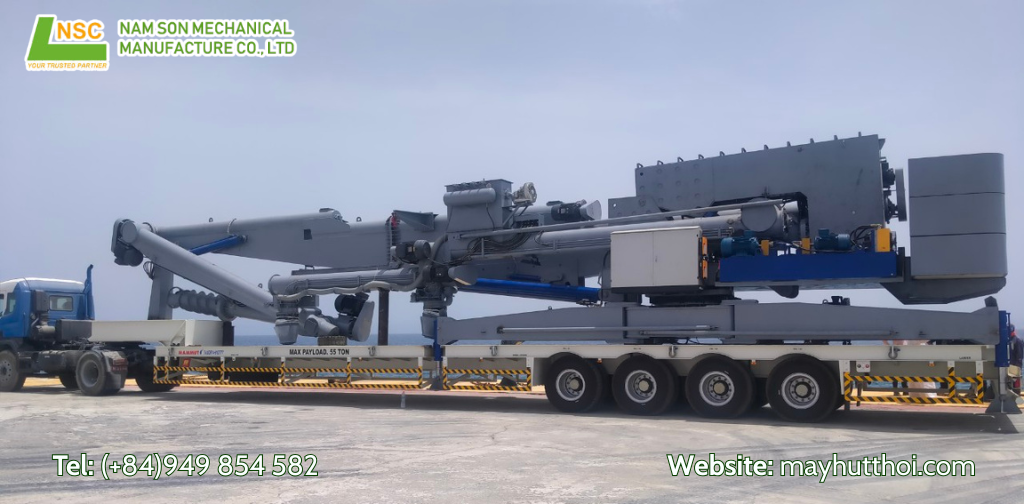
A dry bulk ship unloader is a specialized unloading system used to transfer dry bulk cargo from ships to storage silos, warehouses, stockyards, or downstream conveying equipment. It is widely employed in ports, marine terminals, and industrial facilities that handle large quantities of powdered, granular, or free-flowing materials.
Common materials unloaded by these systems include cement, clinker, coal, limestone, gypsum, grain, fertilizer, fly ash, and various mineral ores. Depending on the characteristics of the material and terminal requirements, different unloading technologies can be selected to achieve optimal performance and efficiency.
=>See more:
What is a ship unloader? A complete guide to its function and applications Definition and Working Principle
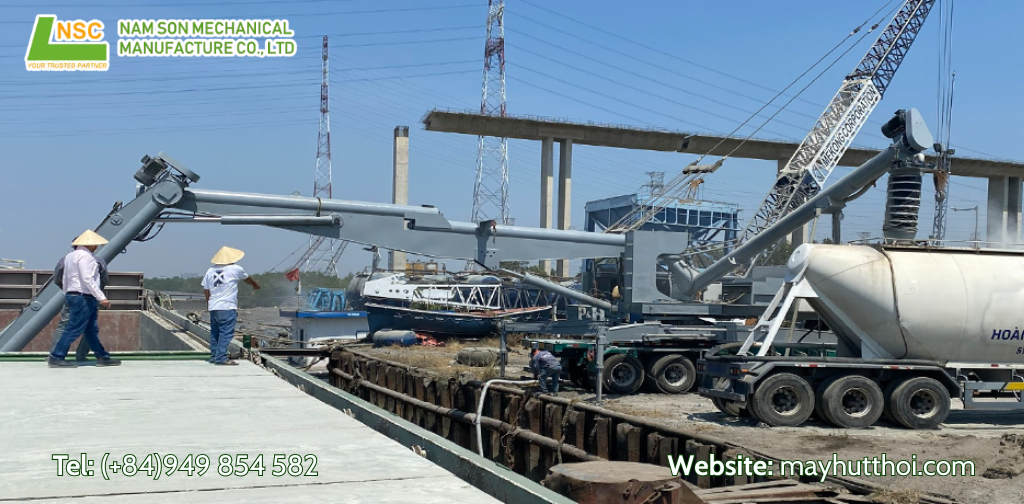
The primary purpose of a dry bulk ship unloader is to remove cargo from a vessel quickly and efficiently while minimizing product loss and environmental impact. The unloading process generally begins when the intake device is positioned above the cargo hold. The material is then collected and transferred into a conveying system that transports it to its final destination.
In pneumatic ship unloading systems, powerful vacuum or pressure mechanisms are used to convey materials through pipelines. This technology is particularly suitable for fine powders such as cement and fly ash because it offers enclosed transportation and excellent dust control.
Mechanical ship unloaders operate using equipment such as grabs, screws, bucket chains, or continuous conveyors. These systems are often selected for handling heavier materials or for terminals requiring very high unloading capacities.
Regardless of the technology used, the objective remains the same: to provide a reliable vessel unloading system that maximizes throughput while maintaining safe and environmentally responsible operations.
Role in Bulk Material Handling Operations
As global trade volumes continue to increase, ports face growing pressure to improve cargo handling efficiency. A dry bulk ship unloader plays a central role in achieving this objective by accelerating the unloading process and reducing vessel turnaround times.
Modern bulk terminals require equipment capable of handling large quantities of cargo with consistent performance. By integrating advanced conveying technologies and automation systems, ship unloaders help operators maintain continuous material flow and optimize logistics operations.
Another important advantage is the reduction of material losses during unloading. Traditional handling methods may result in spillage, contamination, and excessive dust generation. In contrast, modern dry bulk unloading equipment is designed to provide enclosed material transfer, improving product recovery rates and reducing environmental risks.
For industries that depend on a stable supply of raw materials, efficient unloading operations directly contribute to lower operating costs, improved productivity, and enhanced competitiveness. As a result, dry bulk ship unloaders have become a key component of modern bulk material handling systems across ports and industrial facilities worldwide.
Contact us
Looking for a high-performance dry bulk ship unloader for your port or terminal project? Our team provides customized unloading solutions designed to meet your material handling requirements, vessel specifications, and operational goals.
Contact us today to discuss your project and receive professional recommendations tailored to your industry.
° Website: mayhutthoi.com|
namsonco.com° Alibaba:dthson.trustpass.alibaba.com° Facebook: facebook.com/NamSonPneumaticConveyor° Zalo/Whatsapp: (+84) 949854582
° Email: mailan@namsonco.com | thanhson@namsonco.com