
Hotline/Whatsapp: +84 949 854 582thanhson.namson@gmail.com


Efficient bulk cement handling is essential for cement terminals and seaports that receive large quantities of cement by sea. A reliable Ship to Silo Cement Transfer System enables the direct transportation of bulk cement from cargo vessels to onshore storage silos, creating a continuous and controlled material handling process.
By integrating ship unloading equipment, cement conveying systems, transfer pipelines, and silo filling equipment, this solution helps terminal operators improve unloading efficiency, minimize material loss, and maintain stable storage operations. Depending on project requirements, pneumatic or mechanical conveying technologies can be selected to meet different transfer capacities, distances, and site conditions.
A Ship to Silo Cement Transfer System is an integrated bulk cement handling solution designed to move cement from a ship's cargo hold to designated storage silos at ports and industrial terminals.
Unlike conventional bagged cement handling, this system transfers cement in powder form through dedicated conveying equipment without requiring individual packaging. The complete process typically includes cement ship unloading, material receiving, conveying, dust collection, and silo feeding.
As a specialized cement transportation system, it connects marine unloading operations with onshore storage facilities. This makes it particularly suitable for cement import terminals, bulk material ports, and large-scale industrial storage projects.
=>See more: Ship to Silo Cement Unloading System for Efficient Bulk Cement Transfer

The ship-to-silo transfer process involves three main stages. Each stage must be properly coordinated to maintain continuous material flow and prevent operational interruptions.
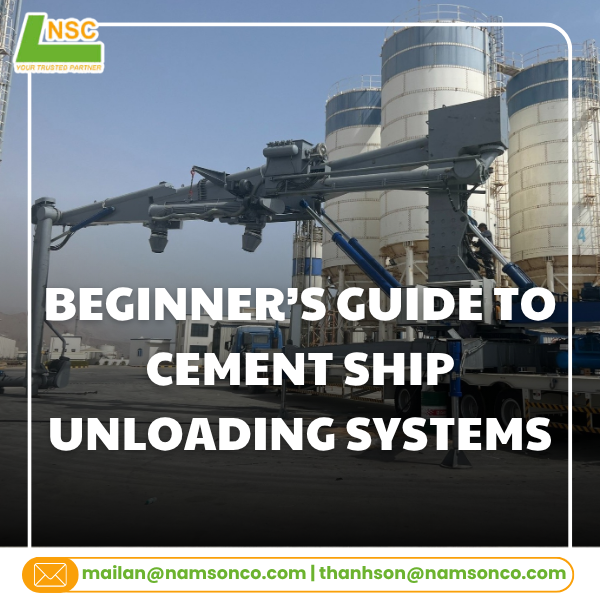
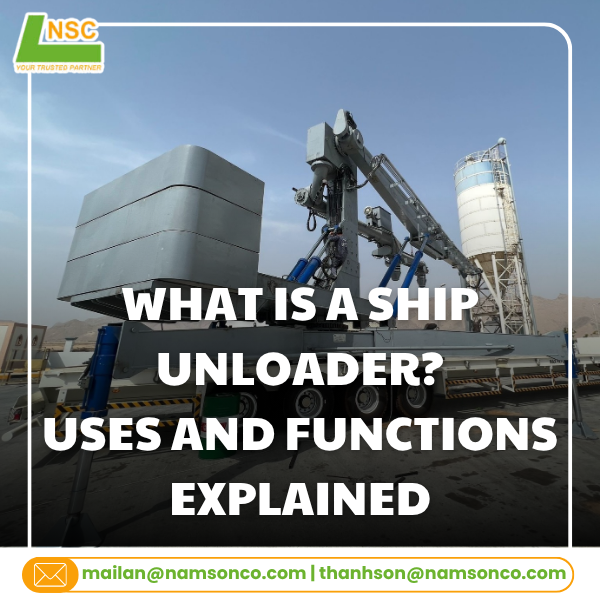
The process begins when bulk cement is discharged from the vessel using specialized ship unloading equipment. Depending on the terminal design, pneumatic ship unloaders or mechanical ship unloaders can be used to extract cement from cargo holds.
The discharged material is directed into a receiving hopper or feeding unit, which regulates the material flow before it enters the conveying system.
After receiving, cement is transported through enclosed pipelines or mechanical conveyor equipment. Pneumatic cement conveying systems use compressed air or vacuum pressure to move fine powder through pipelines, while mechanical systems rely on screw conveyors, belt conveyors, or bucket elevators.
The appropriate conveying method depends on transfer distance, required capacity, pipeline layout, and installation conditions.
At the final stage, cement is delivered to the designated storage silo through a silo inlet and feeding arrangement. Dust collectors and pressure control devices help manage airborne particles and maintain safe operating conditions during filling.
For terminals with multiple storage silos, automated valves and distribution equipment can direct cement to the appropriate storage location.
A complete bulk cement transfer system consists of interconnected equipment designed to ensure reliable material transportation.
Ship Unloading Equipment: Pneumatic ship unloaders and mechanical unloading machines remove cement from vessel cargo holds and transfer it to the receiving section.
Cement Conveying Equipment: Cement transfer pipelines, screw conveyors, bucket elevators, and feeding devices transport materials between unloading and storage areas.
Air Supply Equipment: Industrial air compressors and Roots blowers provide the airflow required for pneumatic cement conveying applications.
Flow Control Equipment: Rotary airlock valves, diverter valves, and cement screw feeders regulate material movement and control the distribution process.
Dust Collection Equipment: Cement dust collectors and bag filter systems capture airborne particles during unloading, conveying, and silo filling.
The selection and configuration of these components should be based on the overall system capacity, operating conditions, and terminal layout.
Two common technologies are used in bulk cement transportation: pneumatic conveying and mechanical conveying. Each has different operating characteristics and installation requirements.
A pneumatic cement conveying system transports fine cement powder through enclosed pipelines using air pressure or vacuum. It is suitable for applications requiring flexible pipeline routing, vertical transportation, and enclosed material handling.
Dense phase and dilute phase conveying are two common configurations. Dense phase systems generally transport material at higher concentrations and lower conveying velocities, while dilute phase systems use higher air velocities to move suspended particles through pipelines.
This technology is widely considered for ship-to-silo applications where pipeline flexibility and dust containment are important.
Mechanical cement conveying systems use physical equipment to move cement between different locations. Common solutions include cement screw conveyor systems, belt conveyors, chain conveyors, and bucket elevators.
These systems can be suitable for specific horizontal or vertical transfer routes, particularly where equipment installation space and material flow conditions allow mechanical transportation.
The final technology should be selected according to conveying distance, required throughput, energy consumption, maintenance requirements, and project investment.
Designing an effective ship-to-silo cement handling system requires more than selecting individual machines. All equipment must operate as one coordinated system.
Transfer Capacity: The required capacity in tons per hour should match vessel unloading rates and the terminal's daily cement handling demand. An appropriately sized system helps reduce vessel waiting time and operational bottlenecks.
Conveying Distance and Layout: Engineers must evaluate the distance between the vessel unloading point and storage silos, pipeline routing, elevation changes, and available installation space.
Dust Control: Enclosed conveying equipment, cement dust collectors, and bag filters help reduce dust emissions and prevent material loss throughout the transfer process.
Automation and Control: Automated cement transfer systems can coordinate unloading, conveying, valve operation, and silo filling. Monitoring equipment also helps operators identify potential operating problems.
Maintenance and Energy Efficiency: Equipment selection should consider power consumption, component durability, accessibility, and long-term maintenance costs.
A properly engineered system should balance transfer capacity, operational reliability, environmental requirements, and overall investment costs.
Ship to silo cement transfer solutions are primarily used in facilities that handle bulk cement through marine transportation.
Cement Import Terminals: Imported cement is unloaded from cargo vessels and transferred directly into onshore storage silos before being distributed to local markets.
Cement Export Ports: These facilities require integrated bulk material handling equipment to support cement storage, transportation, and vessel loading operations.
Industrial Cement Storage Facilities: Cement transfer systems connect receiving stations with multiple storage silos, supporting continuous material supply for downstream production and distribution.
In these applications, an integrated bulk cement terminal system helps improve material handling coordination and supports efficient port logistics.
Choosing an experienced cement transfer system manufacturer is important for ensuring the long-term performance of a port or terminal project.
A qualified supplier should have engineering capabilities in bulk material handling, pneumatic or mechanical conveying, and industrial equipment integration. The ability to customize system configurations according to transfer capacity, conveying distance, and site layout is also essential.
Before selecting a supplier, terminal operators should evaluate equipment quality, technical documentation, installation support, maintenance services, and previous project experience.
For large-scale developments, a turnkey cement transfer system can provide an integrated solution covering equipment selection, system design, installation coordination, and technical support.
A Ship to Silo Cement Transfer System is an essential solution for efficient bulk cement handling at modern cement terminals and ports. By integrating ship unloading equipment, conveying technologies, dust collection systems, and silo filling equipment, it enables controlled cement transportation from marine vessels to onshore storage facilities.
Selecting the right system configuration based on transfer capacity, conveying distance, terminal layout, and operating requirements helps improve unloading efficiency and support reliable long-term operations.
✱ Website: mayhutthoi.com| namsonco.com
✱ Alibaba:dthson.trustpass.alibaba.com
✱ Facebook: facebook.com/NamSonPneumaticConveyor
✱ Zalo/Whatsapp:(+84) 949854582
✱ Email: mailan@namsonco.com | thanhson@namsonco.com


Copyright © 2016 Nhuamisa